Physics-based simulation, AI/ML simulation integration and digital twin adoption are among topics in the CIMdata Inc. Simulation & Analysis Market Report, expanding on its 2025 PLM Market Analysis Report Series.
CIMdata, Inc., a global PLM strategic management consulting and research firm, has released the 2025 CIMdata Simulation and Analysis (S&A) Market Analysis Report. This report builds on the S&A market analysis included in the CIMdata 2025 PLM Market Analysis Report Series. The PLM MAR Series provides comprehensive information and analysis of the worldwide PLM market during calendar year 2024, covering trends and challenges, revenues of leading PLM providers, and revenue breakdowns by geography, industry sector and historical as well as projected market growth.
The 2025 S&A MAR is a 94-page report that includes more than 50 tables and charts presenting market data, covering different aspects of the worldwide S&A market. It also provides an update on CIMdata’s S&A segmentation, an overview of current developments in the S&A industry, and updates on major S&A solution providers.
2024 was marked by three key trends influencing the industry:
- EDA-S&A consolidation: Electronics and semiconductor systems are now used across a broad range of product and processes, extending beyond traditional domains. In response to this demand, EDA solution providers are accelerating efforts to realize the “silicon to systems” software stack vision. Physics-based simulation technology is increasingly included in their offerings.
- AI/ML integration: AI and machine learning capabilities have been incorporated into simulation workflows, primarily in supporting roles. With advances in GPU computing and greater interest in generative AI, startups and established solution providers are exploring new approaches. These include developing models from historical simulation and test data (core machine learning), using physics-informed AI to reduce training time and data requirements, and applying geometric deep learning as a core method. Several companies are also working on foundation models to enable simulation inference from pre-trained model.
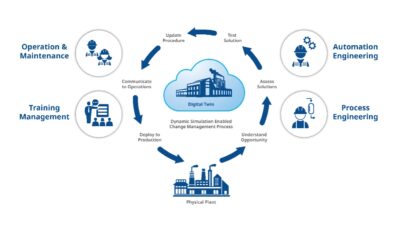
- Digital twins: Adoption of digital twin technology has progressed from pilot projects to broader deployments across industries. Simulation and analysis are core components, enabling physics-based models for forecasting and operational analysis. Companies are applying digital twins in areas such as predictive maintenance and virtual commissioning, supporting feedback between product operation and design.
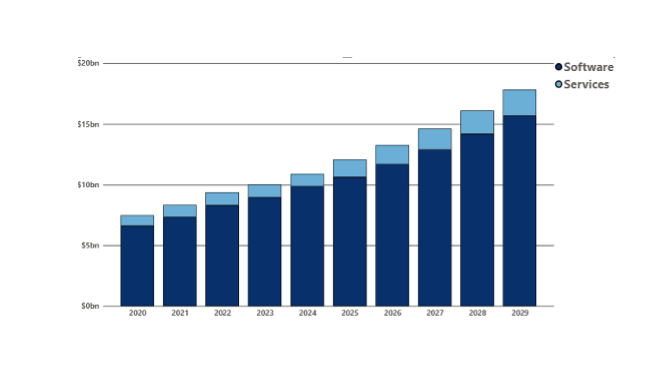
As shown in the chart, S&A revenues reached $10.9 billion in 2024, an 8.8% increase from$10 billion in 2023.
CIMdata projects that the PLM market will continue to expand, though at varying rates across its segments. For 2025, the S&A sub-sector is forecast to grow by 10.7%, reaching slightly above $12 billion in revenues.
Edited by Puja Mitra, WTWH Media, for Control Engineering, from a CIMdata news release.